Aurelius Name Meaning: The Golden History Behind a Timeless Choice
Choosing a name for your baby is one of the very first major decisions you will make as a parent. You want something that feels sturdy, carries a deep history, and sounds effortless when spoken aloud. In recent years, parents across the United States have started turning away from ultra-common choices in search of classical roots and distinctive sounds. That shift has brought several ancient Roman options back into the spotlight, and one particular name is capturing hearts like never before.
Aurelius carries an undeniably regal aura. It evokes images of golden light, ancient philosophers, and timeless leadership. Yet, despite its heavy historical roots, it feels surprisingly fresh and approachable for a boy growing up today. Whether you are drawn to its noble background or simply love the warm, rich sound of its vowels, this choice offers a rare combination of distinction and charm. Here is everything you need to know about where it comes from, what it means, and why it might just be the perfect fit for your family.
Origin and Linguistic Roots of Aurelius
To really understand a name, you have to look at where it started. The name traces its lineage back to ancient Rome, where it functioned as a prestigious Latin clan name, or nomen. It is directly derived from the Latin word aureus, which translates to “golden” or “gilded.” The root word itself links back to aurum, the Latin noun for gold, which is also why the element gold appears as Au on the periodic table.
In ancient Roman society, the Gens Aurelia was a prominent family that produced emperors, statesmen, and scholars. Carrying this family name meant you belonged to a lineage associated with nobility, wealth, and high social standing. The literal translation of “golden” was not just about physical gold coins or jewelry; it symbolized light, valuable character, high worth, and rare beauty.
Look, linguistic evolution is fascinating because names rarely stay in a single form forever. As Latin influenced languages across Europe, this ancient root sprouted various offshoots that parents still use today. You can see its footprint across different cultures:
- Aurelio: The vibrant Italian, Spanish, and Portuguese variation.
- Aurèle: The sleek, minimalist French adaptation.
- Aureliu: The traditional Romanian spelling.
- Aurelia: The stunning feminine counterpart that has enjoyed its own major renaissance.
Truth is, very few names manage to preserve their core meaning for over two millennia while still sounding modern. The enduring connection to gold gives the name a built-in warmth that few other classical choices can replicate.
Historical Legacy: From Roman Emperors to Modern Culture
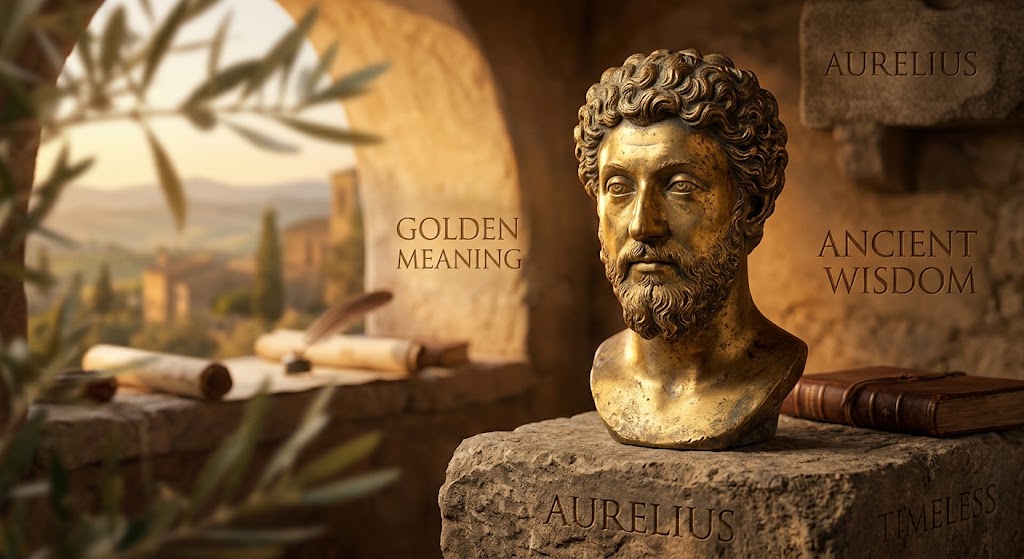
When most people hear the name, one historical giant immediately springs to mind: Marcus Aurelius Antoninus. Ruling as Roman Emperor from 161 to 180 AD, he is widely regarded as the last of the “Five Good Emperors.” But his legacy stretches far beyond military campaigns and political reign. He remains famous worldwide as a Stoic philosopher whose personal journal entries were compiled into the classic text known today as Meditations.
Parents today love this connection because Marcus represented a rare combination of supreme power and quiet humility. His writings emphasize resilience, moral duty, kindness, self-reflection, and mental strength. Giving your child a name linked to one of history’s most thoughtful leaders gives them a built-in namesake grounded in wisdom and integrity rather than brute force.
The name also holds deep roots in early Christian history. Several early saints and bishops bore the name, including St. Aurelius of Carthage, a close associate of St. Augustine in the fifth century. This dual heritage-spanning classical Stoic philosophy and early Christian tradition-gives the choice incredible depth across different cultural and spiritual backgrounds.
Here’s the deal: modern parents are increasingly searching for names that offer substance. We live in an era where ultra-short or newly invented names are everywhere. Choosing a figure from history who stood for quiet discipline and ethical thought offers a grounding alternative that stands out for all the right reasons.
Popularity Trends in the United States
For most of American history, classical Roman names were viewed as overly formal or reserved for textbooks. Throughout the twentieth century, names like John, William, James, and Michael dominated the charts. But the landscape of American baby naming has undergone a massive shift over the last two decades.
Parents are embracing longer, multi-syllabic classical names that end in soft vowel sounds or strong sibilants. You can see this pattern in the massive rise of names like Silas, Atticus, Augustus, and Oliver. Naturally, this trend opened the door for other long-forgotten Roman classics to make their way into modern nurseries.
Data from the Social Security Administration (SSA) shows a clear and steady upward trajectory. While it spent decades well outside the top 1,000 boy names in the United States, it recently broke into the top rankings and continues to climb year after year. It hits that elusive sweet spot that parents constantly search for: easily recognizable, simple to spell, yet far from overused in the average classroom.
| Decade / Year | US Popularity Status | Style Perception |
|---|---|---|
| 1900s-1980s | Rare / Unranked | Historical, academic, obscure |
| 1990s-2000s | Outside Top 1,000 | Eclectic, vintage, literary |
| 2010s | Emerging Choice | Sophisticated, bohemian-chic, rare |
| 2020s-Present | Rising Top 500-1,000 Choice | Modern classic, refined, stylish |
And the momentum isn’t slowing down. As parents look for alternatives to ultra-popular Roman choices like Julian or Adrian, this golden option serves as a fresh yet historically grounded alternative.
Pronunciation, Spelling, and Nickname Options
One of the biggest concerns parents have when considering an older name is whether people will stumble over the pronunciation. Fortunately, English speakers adjust to it very easily once they hear it spoken out loud.
In standard American English, the standard pronunciation is aw-REE-lee-us or aw-REEL-yus. It consists of four syllables, with the primary stress falling directly on the second syllable (REE). The initial “Au” sounds like the “au” in author or august, while the ending soft “us” glides smoothly off the tongue.
To be honest, four-syllable names can sometimes feel like a lot to say on the playground everyday. That is where great nicknames come into play. Having a fun, casual short form allows your child to have a relaxed option for daily life while keeping the full, distinguished name for formal settings.
Here are some of the best nickname options ranging from classic to unexpected:
- Ari: Short, energetic, and extremely popular in modern naming trends.
- Rory: A playful, spirited short form with a warm Celtic feel.
- Eli: A familiar, friendly option derived from the middle syllables.
- Reel / Reely: Unique and modern diminutives for a casual touch.
- Goldie: A sweet, whimsical nod to the literal Latin meaning of the name.
Having a variety of nickname styles means the name can easily grow with your child from toddlerhood through their professional adult career.
How To Pair Aurelius With Middle Names and Surnames
Because it is a four-syllable name ending in a soft “s” sound, pairing it with the right middle name is all about finding the right rhythm and balance. As a general rule of thumb, names with four syllables pair best with short, punchy middle names consisting of one or two syllables.
When selecting a middle option, try to avoid middle names that also end in an “s” or “us” sound (such as Silas or Marcus), as the repeating ends can make the full name feel repetitive. Instead, look for strong consonants or grounding classic options that anchor the flowing nature of the first name.
| Style Category | Middle Name Ideas | Vibe & Impression |
|---|---|---|
| Short Classics | James, Jude, John, Paul | Traditional, balanced, grounded |
| Nature-Inspired | Fox, River, Flint, Wren | Modern, earthy, bohemian |
| Single-Syllable Strong | Grant, Cole, Blake, Vance | Sleek, crisp, professional |
| Literary & Preppy | Dean, Reed, Hayes, Tate | Smart, distinguished, timeless |
Consider how the full combo sounds when read out loud. If you have a short one-syllable last name (like Smith, Vance, or Clark), a grand four-syllable first name creates a balanced cadence. Conversely, if your surname is long and multi-syllable, a simple one-syllable middle name keeps the full name from feeling overwhelming.
Sibling Name Ideas: Creating a Cohesive Family Set
If you choose a grand classical choice for one child, you might wonder how to name future siblings so the family set feels unified. You don’t necessarily have to give every child a Roman name, but picking choices with similar historical weight, rich vowel structures, or classical elegance keeps things cohesive.
Here are several excellent sibling pairings that complement the style seamlessly:
- Brother Ideas: Caspian, Leander, Lucian, Sebastian, Theron, Evander, Cassian
- Sister Ideas: Aurelia, Genevieve, Seraphina, Cordelia, Octavia, Celestia, Evangeline
- Short & Punchy Alternatives: Leo, Felix, Ezra, Milo, Iris, Flora
Notice how these choices share an elevated, poetic quality without feeling overly matched. Whether you lean into full Roman history or mix in Greek, Latin, or vintage English influences, keeping the overall tone sophisticated will ensure your kids’ names sound great together on family holiday cards.
Why Parents Are Choosing Aurelius Today
So, what is driving the rapid rise of this ancient name in modern American nurseries? It comes down to a shift in what parents want out of a name today. Decades ago, fitting in was the primary goal; parents wanted names that blended into the crowd. Today, parents want choices that carry meaning, individuality, and strength.
First, the meaning itself-gold-is universally positive. It carries associations of warmth, high value, light, and enduring beauty. Unlike names tied to specific occupations, physical traits, or aggressive meanings, a “golden” meaning feels timelessly optimistic.
Second, pop culture and literature have helped demystify classical names for young parents. From historical dramas to fantasy literature, audiences have grown comfortable with melodious, historical names. Characters bearing ancient roots feel heroic and refined rather than outdated.
Finally, it simply sounds stunning. The cadence of soft vowels paired with strong internal consonants creates a rich audio profile. It manages to sound simultaneously soft and strong, gentle and commanding-a balance that modern parents actively seek out for their children.
Frequently Asked Questions About Aurelius
Frequently Asked Questions About Aurelius
What Does Aurelius Mean?
The name directly originates from the Latin word aureus (derived from aurum), which means “golden” or “gilded.” In ancient Rome, it carried connotations of high value, light, honor, and nobility.
Is Aurelius a Boy or Girl Name?
It is traditionally used as a masculine name. The most common traditional feminine counterpart is Aurelia, while Aurelie and Aurelina serve as popular feminine variations in European languages.
How Do You Pronounce Aurelius?
In American English, it is most commonly pronounced aw-REE-lee-us or aw-REEL-yus. The emphasis is placed on the second syllable, and the initial “Au” makes a soft “aw” sound.
Is Aurelius a Rare Name in the United States?
While its popularity has been rising steadily over the past decade, it remains relatively rare compared to mainstream choices. It offers a distinctive, uncommon option that is easily recognized but unlikely to be shared by multiple kids in the same classroom.
What Are Good Nicknames for Aurelius?
Popular short forms and nicknames include Ari, Rory, Eli, Aury, and Goldie. These options range from modern and trendy to playful and traditional.
What Is the Famous Historical Connection to Aurelius?
The most famous historical figure with this name is Marcus Aurelius, the second-century Roman Emperor and Stoic philosopher best known for his classic philosophical work, Meditations.
What Middle Names Pair Well With Aurelius?
Short, one- or two-syllable middle names tend to pair best with this four-syllable first choice. Excellent options include traditional and crisp choices like James, Jude, Grant, Cole, Dean, and Fox.
Final Thoughts on Choosing a Golden Classic
By the way, finding a name that checks every single box-deep historical roots, beautiful meaning, great nickname options, and a stylish sound-is no easy task. That is precisely why this Roman classic is gaining so much love among modern parents.
It bridges the gap between ancient history and modern style effortlessly. It honors a legacy of Stoic wisdom, strength, and quiet dignity while offering a warm, approachable vibe for a child growing up today. If you are looking for a name that shines bright, stands out gracefully, and carries a golden legacy, this timeless choice deserves a top spot on your baby name list.
Leave a Reply